


LanTu: Your Professional Metal Enclosures manufacturer!
Jiaxing Lantu Chassis Co., Ltd. is located in Haiyan County, Jiaxing City, Zhejiang Province. It is a company engaged in the design, production and professional production of precision metal molds: aluminum shells, aluminum profile shells, communication chassis chassis, 19-inch chassis, non-standard chassis, hardware for The main well-known enterprises.
Rich Experience
Jiaxing Lantu Chassis Co., Ltd. is a company engaged in the design, production and professional production of precision metal molds.
Customizable Services
The company can also produce suitable products according to the customer's size, drawings, and physical requirements, such as modeling design, structural design and other technical means.
R & D Team
The company has professional R & D capabilities and technical level ranking in the top domestic R & D team.
Wide Range of Applications
It is widely used in electronics, instruments, meters, industrial control, communications, medicine, aerospace and other fields.
Metal enclosures are solid metal cases or covers that are carefully engineered and manufactured to suit a particular application. The components are most often used to surround and protect critical components. They're often used such as shielding expensive equipment from the elements or anywhere where moisture or contaminants are a concern. Alternatively, some metal enclosures perform the opposite function, containing the internal components of a system so that they don't leak into the environment or into adjacent compartments.

Model Number: 3U
Place of Origin: jiaxing, Zhejiang, china
Package Type: Paper Box
Supply Ability: 5000 Piece/Pieces per Week
MOQ: 10

Model Number: 180-1
Place of Origin: jiaxing, Zhejiang, china
Package Type: Paper Box
Supply Ability: 5000 Piece/Pieces per Week
MOQ: 10

Model Number: 3U
Place of Origin: jiaxing, Zhejiang, china
Package Type: Paper Box
Supply Ability: 5000 Piece/Pieces per Week
MOQ: 10

Model Number: LT-30
Place of Origin: jiaxing, Zhejiang, china
Package Type: Paper Box
Supply Ability: 5000 Piece/Pieces per Week
MOQ: 100

Model Number: LT-17
Place of Origin: jiaxing, Zhejiang, china
Package Type: Paper Box
Supply Ability: 5000 Piece/Pieces per Week

Model Number: LT-18
Place of Origin: jiaxing, Zhejiang, china
Package Type: Paper Box
Supply Ability: 5000 Piece/Pieces per Week
MOQ: 100

Model Number: LT-40
Place of Origin: jiaxing, Zhejiang, china
Package Type: Paper Box
Supply Ability: 5000 Piece/Pieces per Week
MOQ: 100

Model Number: LT-84
Place of Origin: jiaxing, Zhejiang, china
Package Type: Paper Box
Supply Ability: 5000 Piece/Pieces per Week
MOQ: 100
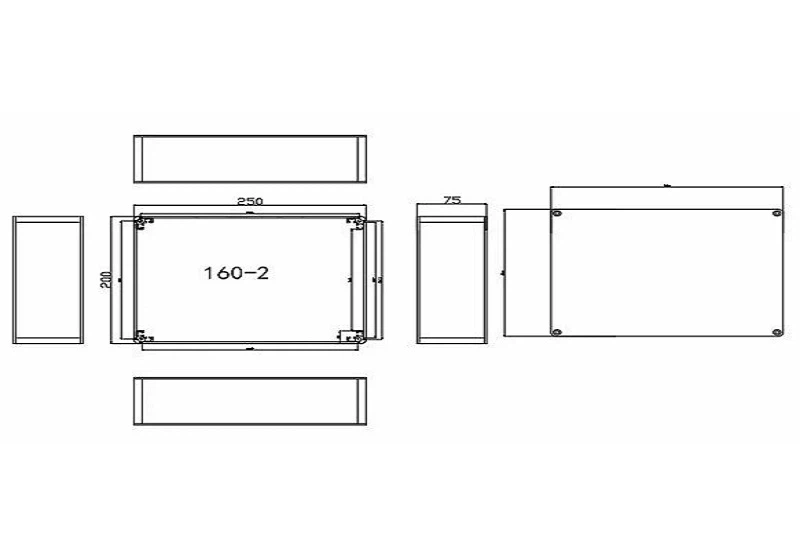
Model Number: 160-2
Place of Origin: jiaxing, Zhejiang, china
Package Type: Paper Box
Supply Ability: 5000 Piece/Pieces per Week
MOQ: 10
Superior Durability
One of the biggest benefits of metal enclosures is their durability. Metal is much stronger than plastic, which means it can withstand physical impacts and harsh environments. This is especially important for electronics that are used in industrial settings or outdoor applications. A metal enclosure can protect sensitive equipment from damage caused by accidental drops or severe weather conditions.
Excellent Heat Dissipation
Electronics generate heat during operation. Metal enclosures are excellent at dissipating this heat. Metals like aluminum and steel have high thermal conductivity, which helps to spread and release heat away from the components inside. This is crucial for preventing overheating, which can damage electronic components and reduce their lifespan. With proper ventilation, metal enclosures help keep devices running smoothly and efficiently.
Enhanced Security
Security is a major concern for electronics, especially in public or high-risk areas. Metal enclosures provide a robust barrier against unauthorized access. They are more difficult to tamper with compared to plastic enclosures. For instance, the 19-inch server Rack is designed to securely house valuable networking and server equipment. With sturdy metal construction, these racks safeguard equipment from theft and tampering.
Superior EMI Shielding
Electromagnetic interference (EMI) can disrupt the normal operation of electronic devices. Metal enclosures are highly effective at shielding against EMI. They create a barrier that prevents electromagnetic signals from interfering with the device's operation. This is particularly important for sensitive electronic equipment that needs to operate without interference. Custom metal enclosures in Alberta can be designed with specific EMI shielding requirements to meet industry standards.
Customization and Versatility
Metal enclosures offer great flexibility in terms of design and customization. They can be tailored to fit specific sizes and shapes, making them ideal for unique or custom applications. For example, custom metal enclosures in Alberta can be designed to meet the exact needs of local industries. This customization can include adding mounting options, ventilation holes, or specific finishes. Additionally, metal enclosures can be painted or coated to match aesthetic or environmental requirements.
Types of Steel Made for Your Metal Enclosure
Carbon Steel
Carbon steels have varying percentages of carbon. In general, the higher the carbon level, the stronger and more brittle the steel. Low-carbon steel (a.k.a. wrought iron) is easy to work and may be used for decorative products, such as fencing or lamp posts. Medium-carbon steel is very strong and is often used for large structures, like bridges. High-carbon steel is used mainly for wires. Ultra-high-carbon steel (a.k.a. cast iron) is often used for cookware, including skillets, pots, and griddles.
Alloy Steel
Alloy steels are made with a small percentage of one or more metals besides iron. This changes the properties of alloy steels. For example, the addition of aluminum can make steel more uniform in appearance. Steel with added manganese becomes exceptionally hard and strong.
Tool Steel
Tool steels are durable, heat-resistant metals containing tungsten, molybdenum, cobalt, and vanadium. They are often used to make tools, such as drills.
Stainless Steel
Stainless steels contain between 10 and 20 percent chromium, making the steel extremely resistant to corrosion, or rusting. This makes stainless steel ideal for products like outdoor enclosures. In fact, when a steel contains over 11 percent chromium, it is about 200 times more resistant to corrosion than steels that do not contain chromium.
Metal enclosures are useful in virtually any industry that employs sensitive or expensive equipment, whether it be batteries, electrical systems, or drilling equipment. The right metal enclosure protects these systems from dirt, contaminants, and fluids, preserving their functionality and preventing downtime. Industrial enclosures similarly prevent dust buildup that can reduce product quality and interfere with proper equipment function over time. Secure, well-fitted metal enclosures are the best way to minimize these risks and keep systems at optimal performance. Industries that often employ custom enclosures to protect their electronics include:
● Food and beverage
● Solar battery storage
● Pharmaceutical processing
● Automotive manufacturing
● Electronics
● Industrial machinery
● Medical
● Printing
Folded Box Shape
This is the classic four-sided box shape with a lid. Because of its unusual design, this enclosure shape allows for easier service and additional mounting possibilities.
F-Shape
F-shape metal enclosures are commonly used to house printed circuit boards with two connections on opposite sides. This enclosure shape is simple to design and manufacture fast.
U-shape
U-shape boxes, like F-shape boxes, are simple to create. They typically have robust bases and are easily accessible for maintenance. U-shaped metal enclosures are most commonly used to house circuit boards with connectors on one side. They allow for easy access during service or maintenance.
L-shape
It is easy to figure out how to make an L-shaped enclosure. Aside from being simple to understand, it also offers easy use. L-shaped metal enclosures often house printed circuit boards with only one connector.
Metal Enclosure Manufacturing Processes
● Metal stamping processes are commonly used for this type of component. These processes form flat sheet metal into simple or complex shapes.
● Deep drawn stamping is especially useful for enclosures that need to be taller than they are wide, such as those that protect cylindrical tanks. In these applications, deep drawn stamping yields seamless and durable enclosures with high precision. This type of manufacturing is also ideal for reducing the number of joined edges or material seams on a part, therefore reducing the likelihood of component failure or the need for material reinforcement at weaker seams.
● Progressive die stamping, which enables continuous production with dramatic shaping, is also useful for enclosures with more complicated configurations. The progressive die process allows a material to be adjusted in small increments to reduce the amount of material fatigue and increase the final component's strength.
● Finishing processes are also practical and popular for the manufacture of these components. Regardless of the material or fabrication technique, metal enclosures often call for additional processing to harden and strengthen the case. Finishing processes like annealing, hardening, or other heat treatment help prepare metal enclosures for the most extreme environments, including corrosive or extreme temperature settings.
Plastic vs Metal Enclosures
Application Requirements
Depending on the specific requirements of the job, you'll have to think carefully about which is going to be preferable. You'll need to think about the environmental conditions, such as temperature and humidity, as well as impact resistance. If your enclosure will be placed in a humid and high-heat environment then metal enclosures may be the preferred choice.
Costs
As we have said, the initial investment can be higher for metal, but it often pays out in the long run, so this is just a balancing act that you need to figure out on a case-by-case basis. It might seem that plastic is a good budget option, but is it really in the long run?
Compliance and Safety Considerations
There are often regulations to consider, which may sway you on which metal enclosure material is best. You have to think about IP ratings, for instance, and whether your specific environment needs a certain material.
Design Options
Often, plastic enclosures have more design flexibility than metal ones, so this too might come into play when you are trying to decide between them.
IP65 Metal Enclosures
Manufacture its customers IP65 metal enclosures so they offer superior protection from dust, dirt and moisture ingress. IP65 ratings signify complete dust ingress protection; in other words they are suitable for environments with lots of dust. In addition, their low pressure water jet resistance also makes them suitable for rain or cleaning processes in all directions - ideal applications include agriculture, food & beverage production as well as marine applications.
IP66 Metal Enclosures
IP66-rated metal enclosures offer even higher water jet protection than IP65 enclosures do, meaning even greater protection is available from powerful water jets. As with the IP65 rating, "6" represents complete dust protection while "66" indicates powerful water jets from all directions can pass through, making IP66 enclosures the ideal choice for harsh outdoor environments or indoor areas that require heavy cleaning such as mining, construction and chemical processing industries.
IP67 Metal Enclosures
When faced with harsh environments, IP67 rated metal enclosures are an excellent solution. These enclosures are 100% dust-tight (represented by the first "6") and capable of submersion into up to 1 metre of water for 30 minutes (represented by "7"). IP67 ratings are frequently chosen when enclosures must withstand highly humid environments, heavy rainfall or occasional flooding - such as those found in oil and gas industries, transportation services or wastewater treatment applications.
8 Tips for Metal Enclosures Design
Understand your product's functional and aesthetics requirements
As with any design, it's a good idea to start with a set of requirements. Basically the what, where and how for what you want your enclosure to do. Presumably it will enclose some type of components. How will these components be laid out? Are you housing a simple PCB or will you be enclosing an array of rack mounted electronics? How will the components be secured to the enclosure? This might require mounting features such as holes, slots, tabs or maybe shelves. It's also common for enclosures to have some sort of cutouts for things like switches, lights or other controls, maybe wire or fluid tubing.
Figure out the desired material for your metal enclosures
Your requirements should help you decide what material (or multiple materials) to build your enclosure from. Each will have a set of advantages and disadvantages. We've listed materials here that can be bent, but you could extend your list of materials greatly by joining the walls of your enclosure by other methods such as welding, adhesives, fasteners, etc. You should also keep in mind that depending on the cut method, cut sheet metal can leave sharp jagged edges, so take care in cutting and handling. Laser cutting is an excellent method for cutting sheet metal as it leaves clean edges.
Choose the right shape
Rectangular boxes are a fairly common shape for metal enclosures, but other shapes can be used to best suit your needs. Shape could be driven by functionality, ease of manufacturing, space available or even purely aesthetics. Display cases especially offer a great opportunity for uniquely shaped enclosures. Fluid tanks will often have a unique shape to direct fluid to a specific point, either a drain or a pickup point. Manufacturing or fabrication of the enclosure itself may be the biggest driver of shape. Using bent panels can reduce the number of parts and joints.
Determine sheet metal gauge and thickness
A critical factor in building anything from sheet metal is determining the thickness of material to use. Strength, stiffness and weight are all clearly influenced by material thickness. Thicker material may provide increased strength and stiffness, but with the trade-off of weight and cost. Another important trait driven by thickness is the bend radius, which we'll cover shortly.
Take dimensional tolerances into consideration
Accurate feature size and placement will affect the final fit and finish of your enclosure. When designing your enclosure, consider the tolerances on the manufacturing processes you'll use.
Mind the bend radius
It's common for metal enclosures to be fabricated using bends. Your design will need to factor in the radius of those bends. Pay particular attention to the proximity of features near bends as they can become distorted if they're too close. Each material, thickness and machine used to form it will result in a unique bend geometry, so it's important that your design accurately reflects that to get your bends and surrounding features in the correct relative positions.
Decide how the enclosure will be assembled
Sheet metal parts can be assembled in multiple ways. Welding is a good choice when the enclosure needs to be sealed well, either to keep weather out or fluids in. Welding seams also allows for them to be ground smooth for a seamless appearance. Rivets are a common option for securing sheet metal panels together. They only require a series of matching holes through each panel. This also makes alignment of panels easy.
Consider how you want to finish your product
Whether it's for corrosion protection, wear resistance or just a beautiful finished appearance, the finish on your enclosure is another design consideration. One option is to select a material that can be finished mechanically. Aluminum, stainless steel, copper and brass can look good polished or brushed. For some enclosures you may want a protective finish. Powder coating is a durable finish for nearly any material. For steel, zinc plating provides excellent protection and is available in multiple colors.
Know About the Potential of Metal Enclosures
Design Flexibility
The versatility of metal enclosures across a broad spectrum of industries and applications is one of its most notable features. Metal enclosures are essential in many different industries, including consumer electronics, transportation, telecommunication, and industrial environments. Because of their adaptable nature, they may be made to fit unique needs, including those related to size restrictions, environmental factors, or aesthetic choices.
Power and Sturdiness
Enclosures made of metal are known for their robustness and longevity. These enclosures are made to last the test of time using sturdy materials like steel, aluminum, or stainless steel. They are perfect for usage in difficult areas where dependability is crucial because of their robustness. Metal enclosures are resilient to a variety of challenges, including severe weather, vibration resistance in automotive applications, and corrosion resistance in maritime situations.
Accurate Engineering
Precise engineering is needed in the design and construction of metal enclosures from metal enclosure manufacturer. To guarantee optimum performance, every detail is carefully studied, from the selection of materials to the assembly procedure. Sensitive equipment is safely housed in metal enclosures thanks to precision production, which guarantees that they satisfy strict quality standards. High-tech methods including robotic welding, CNC machining, and laser cutting are used to precisely meet the required parameters.
Creativity and Coordination
Metal enclosures are becoming more and more capable as technology develops. The frontiers of what is feasible are constantly being pushed by advances in materials science and industrial processes. Alloys that are robust but lightweight provide increased portability without compromising strength. Easy installation and maintenance are made possible by the seamless integration of components made possible by modular designs. Furthermore, features like ingress protection and thermal management systems guarantee that contemporary metal enclosures are ready to meet the needs of rapidly advancing technology.
Ultimate FAQ Guide to Metal Enclosures
Hot Tags: metal enclosures, China metal enclosures manufacturers, suppliers, factory, 4u server chassis, server rack atx case, media server pc case, 4u 24 bay server case, good server case, 2u rack mount server


