


LanTu: Your Professional Aluminum Extrusion Cases manufacturer!
Jiaxing Lantu Chassis Co., Ltd. is located in Haiyan County, Jiaxing City, Zhejiang Province. It is a company engaged in the design, production and professional production of precision metal molds: aluminum shells, aluminum profile shells, communication chassis chassis, 19-inch chassis, non-standard chassis, hardware for The main well-known enterprises.
Rich Experience
Jiaxing Lantu Chassis Co., Ltd. is a company engaged in the design, production and professional production of precision metal molds.
Customizable Services
The company can also produce suitable products according to the customer's size, drawings, and physical requirements, such as modeling design, structural design and other technical means.
R & D Team
The company has professional R & D capabilities and technical level ranking in the top domestic R & D team.
Wide Range of Applications
It is widely used in electronics, instruments, meters, industrial control, communications, medicine, aerospace and other fields.
Extruded aluminum cases are protective housings made by forcing aluminum through a die to create long sections with specific cross-sectional profiles. These cases are widely used to safeguard electronic components, provide structural support, and ensure effective heat dissipation in various applications, ranging from consumer electronics to industrial machinery.

Model Number: 3U
Place of Origin: jiaxing, Zhejiang, china
Package Type: Paper Box
Supply Ability: 5000 Piece/Pieces per Week
MOQ: 10

Model Number: 180-1
Place of Origin: jiaxing, Zhejiang, china
Package Type: Paper Box
Supply Ability: 5000 Piece/Pieces per Week
MOQ: 10

Model Number: 3U
Place of Origin: jiaxing, Zhejiang, china
Package Type: Paper Box
Supply Ability: 5000 Piece/Pieces per Week
MOQ: 10

Model Number: LT-30
Place of Origin: jiaxing, Zhejiang, china
Package Type: Paper Box
Supply Ability: 5000 Piece/Pieces per Week
MOQ: 100

Model Number: LT-17
Place of Origin: jiaxing, Zhejiang, china
Package Type: Paper Box
Supply Ability: 5000 Piece/Pieces per Week

Model Number: LT-18
Place of Origin: jiaxing, Zhejiang, china
Package Type: Paper Box
Supply Ability: 5000 Piece/Pieces per Week
MOQ: 100

Model Number: LT-40
Place of Origin: jiaxing, Zhejiang, china
Package Type: Paper Box
Supply Ability: 5000 Piece/Pieces per Week
MOQ: 100

Model Number: LT-84
Place of Origin: jiaxing, Zhejiang, china
Package Type: Paper Box
Supply Ability: 5000 Piece/Pieces per Week
MOQ: 100
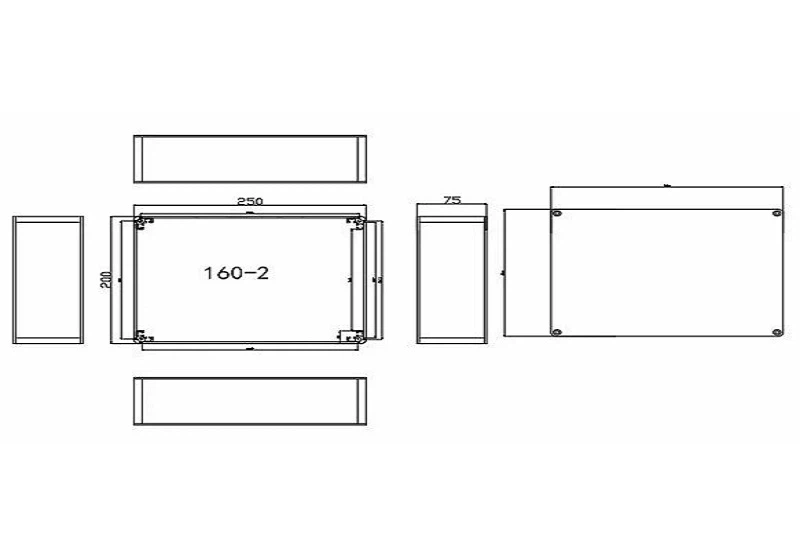
Model Number: 160-2
Place of Origin: jiaxing, Zhejiang, china
Package Type: Paper Box
Supply Ability: 5000 Piece/Pieces per Week
MOQ: 10
Very Light Weight
Aluminum has a high strength-to-weight ratio. Aluminum extrusion cases are lightweight, yet strong.
Extremely Strong
The strength of aluminum offers much better fracture toughness than most other materials used in enclosures construction. It is resistant to impacts, mechanical breakage, and propagation of fractures; it does not easily stress, tear, or crack.
Extraordinary Resistance to Corrosion
Aluminum is highly resistant to nearly all substances – such as salt water – that cause corrosion and weathering. Exposure to UV rays for long periods has no effect.
Insensitive to Temperature Extremes
The characteristics of aluminum remain constant over a wide temperature range – 80 °C to + 150 °C. In cold weather, aluminum extrusion cases do not become more fragile and brittle; instead, the tensile strength increases without lose of ductility. The low coefficient of thermal expansion of aluminum allows it to sustain higher temperatures without distortion.
Naturally Protects Electronics
Aluminum has the highest electrical conductivity-to-weight ratio of any metal. An aluminum extrusion cases is excellent for RFI / EMI shielding and controlling ESD (electrostatic discharge). Aluminum is also an efficient reflector for externally generated interference, namely, electromagnetic wavelengths of radio and radar.
Excellent Heat Dissipation
Aluminum is widely used in heat sinks and heat exchangers because of its high thermal conductivity. In a shipping case, it efficiently transports heat away electronics and other equipment. Aluminum has high reflectance to encroaching radiated heat such as sunlight (aluminum has a light reflectivity over 80%).
Suited for Harsh Environments
For rugged and outdoor environments, aluminum extrusion cases can be fitted with options to meet watertight, splash-proof, drip-proof, and salt spray requirements. Water vapor will not diffuse through aluminum or through a welded seam.
Low Cost Customization
Aluminum extrusion cases can be easily customized using secondary operations such as drilling, laser cutting, riveting, welding, brazing, soldering and more. There's no need to pay for a special mold. Aluminum is often easier to modify than cases of other materials.
Beautiful Finishes
Aluminum extrusion cases accommodate virtually every kind of finish whether mechanical (such as brushing or polishing) or chemical (such as anodizing). Almost any coating, such as paint and powder coatings, can be applied.
Aluminum is Safe
Aluminum is non-toxic, odorless, tasteless, non-absorbing, non-sparking, non-magnetic, and non-flammable. Therefore, aluminum extrusion cases can be used in a wide variety of special environments, such as sanitary and clean rooms, food service areas, and in many volatile applications. It is also fully recyclable.
Application of Aluminum Extrusion Cases
Aerospace Components
One of the most common applications for aluminum extrusion cases is protecting aerospace components from harsh environmental conditions. In the aerospace industry, aluminum extrusion cases are often used to protect instrumentation, avionics, and communication systems required for safe travel. Using aluminum extrusion cases over other protective materials is vital for the aerospace industry because aluminum provides a lightweight solution, helping reduce the aircraft's overall weight and promoting greater fuel efficiency.
Military and Defense
The numerous benefits of aluminum extrusion cases make this solution essential for the military and defense industry. aluminum extrusion cases serve various purposes, such as protecting electronics and communication equipment vital for efficient commands. aluminum extrusion cases are also used for military aircraft and ground vehicles to protect electronic control systems and critical equipment to keep operations running. Because aluminum extrusion cases are durable and corrosion-resistant, they protect equipment in dangerous environments. Aluminum extrusion cases also have naval applications that make them necessary in the military industry. These enclosures protect electronic systems in naval vessels, like navigation equipment, to prevent exposure to external elements. The enclosures are lightweight, providing portability for military equipment.
Chemical Processing Plants
Aluminum extrusion cases are highly useful in environments like chemical processing plants because of their durability and corrosion resistance. Chemical processing plants are home to several corrosive elements that can damage the integrity of electronic components, making aluminum extrusion cases essential to protect equipment from chemicals and corrosive atmospheres. In chemical processing plants, aluminum extrusion cases are often used to protect electrical panels, control units, and junction boxes, ensuring systems run smoothly and safely throughout the plant. The aluminum's durability makes it suitable to withstand harsh conditions long-term.
Telecommunications
Aluminum extrusion cases are widely used in the telecommunications realm, providing a level of security required to protect electronic equipment from damage. Within this realm, aluminum extrusion cases protect networking equipment and communication devices for in-house environments and outdoor applications, protecting cables and other equipment with an unmatched level of durability.
The manufacturing process of aluminum extrusion cases involves several key steps. This process allows to produce complex shapes with high precision and uniformity. The process can be broken down into the following stages:
Heating the Aluminum Billets: The aluminum billets are heated to a temperature where the metal becomes malleable but not molten. This typically ranges between 900°F and 1100°F (482°C to 593°C).
Extrusion through a Die: The heated aluminum is then forced through a die using a hydraulic press. The die is a specialized tool that shapes the aluminum into the desired profile as it exits the press.
Cooling: The extruded aluminum profiles are rapidly cooled using air or water quenching to solidify the metal and set the shape.
Cutting to Length: Once cooled, the extruded sections are cut to the required lengths for further processing.
After the extrusion process, the aluminum sections undergo further machining processes.
These include drilling, tapping, milling, and the addition of features like mounting holes, cutouts for connectors, and slots for ventilation. The final step involves finishing, which can include anodizing, powder coating, or painting.
What Should We Consider When Designing Aluminum Extrusion Case?


Thermal Management
Proper heat dissipation is crucial for electronic enclosures. Design features such as fins and vents can enhance thermal management. Integrating heat sinks and ensuring adequate airflow can prevent overheating and prolong the lifespan of the components.
Structural Integrity
The enclosure must provide sufficient strength and rigidity to protect the components inside. This requires careful consideration of the material thickness and reinforcement features. Internal ribs and supports can be added to improve structural strength without significantly increasing weight.
Ease of Assembly
The design should facilitate easy assembly and disassembly for maintenance and upgrades. Consideration of mounting points and fasteners is essential.
Aesthetic Considerations
The appearance of the enclosure can be important, particularly for consumer-facing products. Smooth finishes, sleek designs, and color options can enhance the visual appeal of the enclosure.
Polishing
Use mechanical, chemical or electrochemical methods to reduce the roughness of the surface of the aluminum extrusion case to obtain a bright and smooth surface. Polishing technology is mainly divided into mechanical, chemical, and electrolytic polishing. After mechanical and electrolytic polishing, the aluminum parts of the car can be close to the mirror effect of stainless steel. This kind of aluminum extrusion case gives people a sense of high-end, simple and fashionable in the future.
Sandblasting
Cleaning and roughening metal surfaces by the impact of high-velocity sand streams. Surface treatment of the aluminum extrusion case by this method can obtain a certain degree of cleanliness and different roughness on the surface of the aluminum profile housing, improve the mechanical properties of the workpiece surface, thereby improving the fatigue resistance of the workpiece, and increasing the distance between the workpiece and the coating. It can improve the adhesion between the coatings, prolong the durability of the coating film, and is also conducive to the smoothness and decoration of the coating. We often see this kind of aluminum enclosure processing technology in the solar frame, and it is also increasingly used by the existing TV shell or middle frame.
Wire drawing
Metal wire drawing is the process of repeatedly scraping outlines with sandpaper. Drawing can be divided into straight, random, spiral, and thread. The metal wire drawing process can clearly show every tiny line mark so that the metal matte shines with a delicate hair luster and the extruded aluminium enclosure integrates fashion and technology.
Strong light cutting
The finishing machine strengthens the diamond knife to cut the parts on the spinning machine spindle rotating at high speed (usually 20000 rpm) to form a local high-gloss area on the surface of the extruded aluminum box. The brightness of the cutting highlights is affected by the speed of the milling cutter. The faster the drill speed, the brighter the cutting highlights. Conversely, the darker the cutting highlights, the easier it is to produce the pattern. High-gloss cut aluminum profiles are often used in mobile phones. In recent years, some high-end TV metal frames have adopted high-gloss milling technology, coupled with anodizing and wire-drawing technology, making the TV full of fashion and technology.
Anodizing
Anodization refers to the electrochemical oxidation of metals or alloys. Under the corresponding electrolyte and specific process conditions, aluminum and its alloys form an oxide film on the aluminum product (anode) under the action of an applied current. Anodizing can not only solve the defects of aluminum surface hardness and wear resistance but also prolong the service life of aluminum and enhance its beauty of aluminum. It has become an indispensable part of aluminum surface treatment and is currently the most widely used and successful waterproof aluminum enclosure processing craft.
Two-color anodizing
Two-color anodizing refers to anodizing the aluminum extrusion case and giving different colors to specific areas. The two-color anodizing process is complicated and the cost is high. However, comparing the two colors can better reflect the high-end and unique appearance of the aluminium profile enclosure.
The Vital Role of Aluminum Extrusion Cases in Robotics Technology
Robust Protection for Sensitive Components
Robots are equipped with various electronic components, including sensors, control units, and communication systems, all of which require protection from environmental hazards. Our aluminum extrusion cases are designed to withstand harsh conditions, shielding internal components from dust, moisture, and mechanical shocks. With features such as weather-resistant seals and reinforced corners, our metal project boxes ensure that sensitive instruments remain operational even in the most demanding environments.
Lightweight Yet Strong
One of the most significant advantages of using aluminum for robotics applications is its excellent strength-to-weight ratio. Our instrument enclosure boxes are lightweight, which is crucial for mobile robots that need to optimize energy consumption and improve maneuverability. By integrating our aluminum enclosures, robotic designers can achieve a balance between structural integrity and weight efficiency, leading to enhanced performance in various applications, from industrial automation to service robots.
Thermal Management
Effective thermal management is critical in robotics, where overheating can lead to performance failures. Our aluminum extrusion cases are engineered to dissipate heat efficiently, preventing overheating of internal components. The inherent thermal conductivity of aluminum allows for effective heat dissipation, ensuring that robots operate within safe temperature ranges. Additionally, we offer optional ventilation features and heat sink designs that further improve thermal management, making our project enclosure boxes suitable for high-performance robotic applications.
Customization for Diverse Applications
Our aluminum extrusion cases can be customized to meet specific design criteria, including dimensions, mounting options, and internal layouts. This flexibility allows engineers to tailor enclosure solutions that fit their project requirements precisely. Whether it's a compact instrument enclosure box for a small robotic arm or a larger project enclosure box for an autonomous vehicle, our products can adapt to various applications.
Ease of Assembly and Maintenance
Time is of the essence in robotics development, and our project enclosure boxes are designed for easy assembly and maintenance. With pre-drilled mounting holes and user-friendly designs, engineers can quickly install and replace components within the aluminum enclosures. This ease of access is crucial for maintaining robotic systems, allowing for rapid troubleshooting and upgrades without extensive downtime.
Aesthetic Appeal and Branding
In addition to functionality, the aesthetic aspect of robotic systems cannot be overlooked. Our aluminum enclosures can be finished with various surface treatments, including anodizing and powder coating, which not only enhance corrosion resistance but also provide an appealing appearance. Custom branding options allow companies to showcase their logo and design on the enclosure, reinforcing brand identity in a competitive market.
Sustainability and Eco-Friendliness
As environmental concerns grow, the demand for sustainable materials in robotics is increasing. Aluminum is a highly recyclable material, making our aluminum extrusion cases an eco-friendly choice. By choosing our enclosures, companies can demonstrate their commitment to sustainability while benefiting from the durability and performance of aluminum. We aim to reduce our carbon footprint through responsible manufacturing practices and the use of recyclable materials.
Key Considerations for the Logistics and Transportation of Aluminum Extrusion Cases
Packaging Solutions
The first step in ensuring safe transportation is to choose the right packaging. Custom aluminum cases should be packaged using high-quality materials that can withstand the rigors of shipping. This includes using sturdy cardboard boxes, foam inserts, or custom-designed crates that fit the enclosures snugly, preventing movement and damage during transit.
Labeling and Documentation
Proper labeling is essential for facilitating the transportation process. Each package should have clear labels indicating the contents, handling instructions, and destination. Additionally, all necessary shipping documents, including invoices, packing lists, and customs paperwork, should be prepared in advance to avoid delays at checkpoints.
Choosing the Right Carrier
Selecting a reliable carrier is another critical aspect of logistics. It's important to partner with carriers that have experience in handling sensitive industrial products. Research and choose carriers that specialize in shipping aluminum extrusion cases or similar products to ensure they understand the specific requirements and challenges.
Insurance Coverage
While it's impossible to predict every potential issue during transportation, having adequate insurance coverage can mitigate financial risks. Manufacturers should consider insuring their shipments against damage or loss. This provides peace of mind and protects the business from unexpected costs.
Temperature and Environmental Control
Aluminum extrusion cases can be sensitive to extreme temperatures and moisture. When shipping, it's essential to consider the environmental conditions that the products may be exposed to during transit. Utilizing climate-controlled containers can help protect against potential damage caused by temperature fluctuations or humidity.
Tracking and Communication
Providing real-time tracking information to customers can significantly enhance their experience. Implementing tracking systems allows both manufacturers and customers to monitor the status of shipments. Additionally, maintaining open lines of communication with carriers and customers can help address any potential issues promptly.
Ultimate FAQ Guide to Aluminum Extrusion Cases
Hot Tags: aluminum extrusion cases, China aluminum extrusion cases manufacturers, suppliers, factory, best rackmount case, 24 bay server case, 4u case, rackmount watercooling case, used server chassis, 2u desktop case


